Daily Tech News
Farming Beneath the Sea: How Italy Is Combining Sensors, IoT and Engineering to Grow Crops Underwater
15 Nov 2026
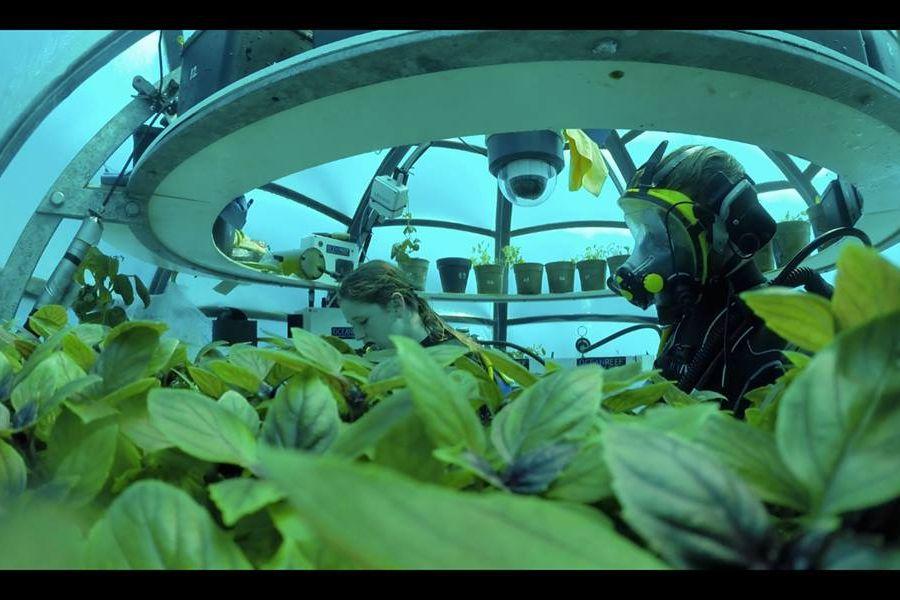 Off the coast of Noli, Italy, an extraordinary agricultural experiment is challenging the traditional idea of farming. Plants are growing several metres beneath the Mediterranean Sea, inside transparent underwater greenhouses. But the real innovation is not simply growing crops underwater — it is the technology making such a system possible.
From an experiment to an underwater agricultural laboratory
Launched in 2012 by Sergio Gamberini, founder of Ocean Reef Group, Nemo's Garden began with a simple question: could terrestrial plants grow beneath the sea?
More than a decade later, the project has developed into a sophisticated agricultural research platform, combining hydroponics, environmental sensors, remote monitoring and underwater engineering.
In 2025, Nemo's Garden underwent a major technological upgrade, replacing older structures with nine new biospheres equipped with improved control electronics. The project also introduced new designs intended to make underwater cultivation easier to transport, assemble and scale.
Nemo's Garden+1
The technology behind underwater farming
Unlike conventional agriculture, the plants are not grown directly in seawater. Instead, they grow inside air-filled transparent structures anchored to the seabed at depths of approximately 5–10 metres.
Inside these biospheres, the combination of sunlight, seawater evaporation and condensation helps produce fresh water for irrigation.
However, the most interesting part from an engineering perspective is the integration of digital technology.
Each biosphere uses environmental sensors to monitor conditions such as temperature, humidity, illumination, oxygen and carbon dioxide. Data is transmitted to a shore-based control centre, where researchers can supervise the growing environment remotely.
The system incorporates hydroponic cultivation, electronic control systems, communications infrastructure and software-based monitoring — demonstrating how technologies normally associated with industrial automation can also support agriculture in unusual environments.
Nemo's Garden+2
The latest innovation: modular underwater farms
One of the project's most important recent developments is its move towards modular greenhouse structures.
The new BioTunnel design offers four times the planting capacity in a compact, linear arrangement, according to Nemo's Garden. Another design, the Geosphere, can be assembled on-site, reducing the logistical challenges associated with transporting complete underwater structures.
These developments represent a shift from proving that underwater cultivation is possible towards investigating whether the technology could become a practical, scalable agricultural solution.
Nemo's Garden
For regions facing drought, limited agricultural land or increasingly extreme temperatures, such controlled environments could eventually offer an alternative approach to producing certain high-value crops.
Where robotics and artificial intelligence could come next
Underwater farming also presents an interesting opportunity for robotics and artificial intelligence.
Future systems could potentially use autonomous underwater vehicles to inspect greenhouse structures, computer vision to assess plant health, and AI-based controllers to optimise irrigation and environmental conditions.
Combining sensor measurements with predictive algorithms could allow operators to identify abnormal conditions before they affect crop growth.
These are potential future applications rather than confirmed capabilities currently operating at Nemo's Garden. Nevertheless, the existing monitoring infrastructure demonstrates how an agricultural facility can become a digitally connected system.
Could this be the future of agriculture?
Nemo's Garden is not yet a replacement for conventional farming. Underwater installations face significant challenges, including construction costs, maintenance, marine conditions and the complexity of harvesting crops.
Yet the project demonstrates something important: agriculture is increasingly becoming an engineering discipline, where sensors, electronics, communications, software and automation are as important as the growing environment itself.
From underwater greenhouses in Italy to autonomous agricultural robots operating on land, the next generation of farming may depend on technologies that were once developed for entirely different industries.
For DigInto.tech, Nemo's Garden is an example of how combining engineering with unconventional thinking can open new possibilities for agricultural technology.
Sources: Nemo's Garden – Project developments · Underwater technology and monitoring · Adnkronos, 16 September 2026
Editorial recommendation: The strongest news angle for DigInto.tech is the upgraded underwater farm and its expansion into modular, sensor-controlled agriculture, rather than the original 2012 experiment. The September 2026 coverage also makes this a timely story about technology addressing climate-related agricultural challenges.